Dear fellow Real estate owners and potential owners
When you own a home, we all know that it is an investment and we all want to protect our investment.
So a little maintenance is a great idea and well worth the time and can save you $1000’s in the long run. Just like a vehicle when it needs a repair we usually take care of it right away so that it will last us longer or be worth more if we go to sell it.
So I would like to help you protect what you work SO hard for.
Here are a few tips to keep in mind, for this fall ( before the snow flies) ( picture the snow flies)
- Are your plumbing vent stacks higher than potential snow depth on your roof, they must be able to breathe
- Get on your roof ( or hire someone) to check for potential leaks, or ice damming
- Be sure to maintain a humidity level around 50%, helps avoid dry skin and nose bleeds
- Check for heat loss around windows and doors. ( ask me how, it is simple, it can save you $)
- Check for heat loss around outlets, on exterior walls as well as interior walls.
- Remove window air conditioners, they can be a big heat loss.
- Check attic hatchs and light fixtures for heat loss.
- Check for deteriorated caulking, remove and re-caulk, keeps out cold air, moisture, bugs
- Bugs and rodents/pests look for warm places for the winter, they can cause a lot of damage.
- Turn off outside taps and drain, wrap all water pipes ( ask me why)
- Check for moisture gathering and mold in your bathroom, you should have an exhaust fan.
- For older windows consider shrink wrap or heavy curtains to keep heat in, be sure to open during daylight
- Look for condensation on windows and walls, fix the issue or it will frost up on Cold nights,
- Stake out things that may get buried in snow, this way snowblower won’t catch them
- Cut the grass one more time, it’s easier to rake off leaves and gravel in the spring, you’ll thank me
- Very important, be sure that your CO2 and smoke detector are working well.
- Remember to let the sun in during the winter to warm the house and be sure to close the drapes at night to keep the cold out, however , it is a must to open drapes in the daytime, ask me why? This is just the begining, please feel free to call me and I would be glad to help you better understand these and more items.
IF YOU WOULD LIKE A COMPLIMENTARY ANNUAL MAINTENANCE CHECKLIST, CALL OR EMAIL TODAY. IF YOU DO NOT OWN A HOUSE PASS IT ON TO SOME ONE THAT DOES AND TELL THEM I SENT IT. MAINTENANCE IS VERY IMPORTANT TO THE OVERALL HEALTH OF YOU AND YOUR HOME. CALL ME IF YOU WOULD LIKE MORE DETAILS. IT'S FREE.
If you have any questions OR would like a HOME VISIT, please feel free to call me and I can explain in more detail and how this will affect your future home value. As well if you have any Real estate questions please give me a call today and I would be very happy to come and see you and give you some very helpful tips in maintenance to increase your home value. Check out my blog and website for more great information. As well when you or someone you know would like to buy or sell, call me today, and I will give them the great service they deserve.
Thankyou for taking the time to read this,
Joseph Talbot
705-733-5821 direct line/text
jtalbot@remax.net
Have a terrific day!!
REMEMBER, A HEALTHY HOME MAKES FOR A HEALTHIER YOU
Thursday, October 13, 2011

Wednesday, September 28, 2011
What’s the Deal Here?

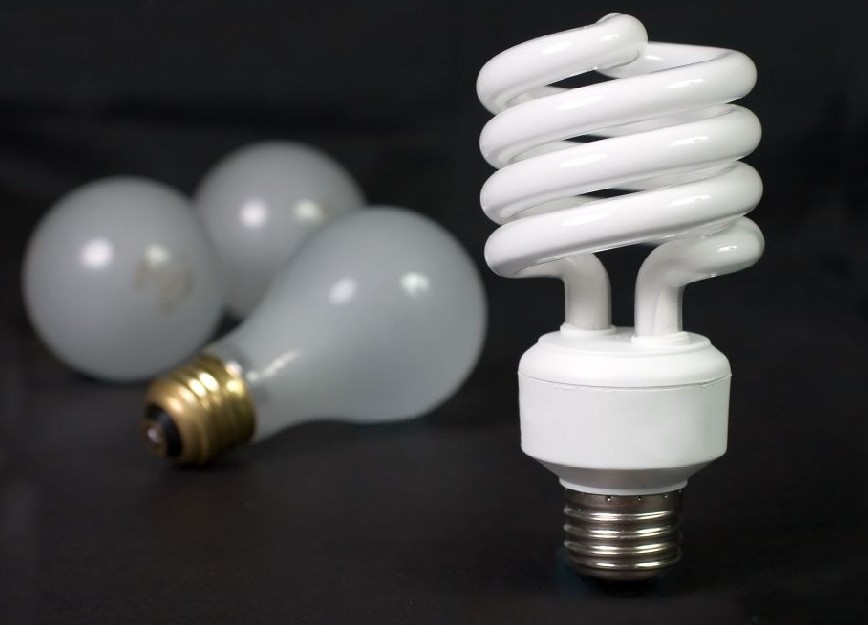
Have you ever thought of reducing the energy your home uses? Have you ever looked at the cost associated with energy-related products and services? Do you even care?
Well, as a realtor, an investor, a builder and a home-owner, I do care, but there are many factors to consider. The overwhelming issue that tends to dictate whether or not I will invest, is usually the project’s cost and return on investment.
For instance, a while ago I spent the time and aggravation to purchase and install compact fluorescent light bulbs (CFLs) throughout my whole house. I bought them from Canadian Tire and Home Depot , rather than the dollar store, so the cost was significant. Highly recommended for energy efficiency and long life span, they were supposed to outlast regular bulbs by many, many hours.
Unfortunately, that wasn’t the case for me. Most of them blew within a few months and boy do they stink when they blow up. One Sunday, just before we headed out for Church , I noticed a blown CFL in my kitchen light fixture. I quickly grabbed a chair and jumped up and to replace it. When I tried to turn the bulb, the thinner glass actually broke in my hands and cut me. (I still have all my fingers, just a little less blood.)
Then I start to read the warning labels on these CFL’s . . . TOXIC!! Pregnant or nursing mothers and children should be evacuated from the room. Needless to say, with small children in my home, I have not bought another one since and never will.
Now, how about the cost of these things?? I will never get my money out of them! Not sure what the big hype was all about, but I figure it’s all a scam. Next time I go and try and be energy conscious, I will be cautious enough to research and ask around more.
I have done many other things to help the environment and save on energy bills, but we will get into that next time.
Have you thought about reducing energy use in your home? How have you been able to do it in a cost effective way? Feel free to comment here.
Image Credit: Retreived from http://www.pollsb.com/photos_handler/o/44370-switch_energy_saving_light_bulbs.jpg, October 4, 2011.
Image Credit: Retreived from http://www.pollsb.com/photos_handler/o/44370-switch_energy_saving_light_bulbs.jpg, October 4, 2011.
Wednesday, September 21, 2011
New Listing: 233 Cherry Street, Stayner
Welcome to this 3 bedroom, 2 bathroom Century Home. The lot is huge and the 2 story barn would be a great workshop or garage. For more information or to view the inside of the home, book an appointment with Joseph today.
Please ignore the cat's input throughout the video. Not sure he wants us to sell the house. :)
Please ignore the cat's input throughout the video. Not sure he wants us to sell the house. :)
Monday, August 1, 2011
Long Weekend Cottage Country Traffic Got You at a Stand-Still?
Why not live here full time?
Real Estate in Georgian Bay area has so much to offer. With new properties being built all the time, and gorgeous older homes available too, we can find the home that's right for you. Whether you ski or golf at Blue Mountain, hike the Bruce Trail or swim at Wasaga Beach, living in this area gives you the opportunity to play, anytime!
So many companies are offering at least part-time solutions to the regular commute, such as part-time work weeks or telecommuting and many Torontonians are taking advantage, finding solitude in nature and unity in our small communities.
If you're not ready for full-time living, cottages, weekend homes and investment properties abound. Come and visit Stayner, Creemore, Wasaga Beach, Collingwood and the surrounding areas to explore your options. You won't be disappointed.

Real Estate in Georgian Bay area has so much to offer. With new properties being built all the time, and gorgeous older homes available too, we can find the home that's right for you. Whether you ski or golf at Blue Mountain, hike the Bruce Trail or swim at Wasaga Beach, living in this area gives you the opportunity to play, anytime!
So many companies are offering at least part-time solutions to the regular commute, such as part-time work weeks or telecommuting and many Torontonians are taking advantage, finding solitude in nature and unity in our small communities.
If you're not ready for full-time living, cottages, weekend homes and investment properties abound. Come and visit Stayner, Creemore, Wasaga Beach, Collingwood and the surrounding areas to explore your options. You won't be disappointed.
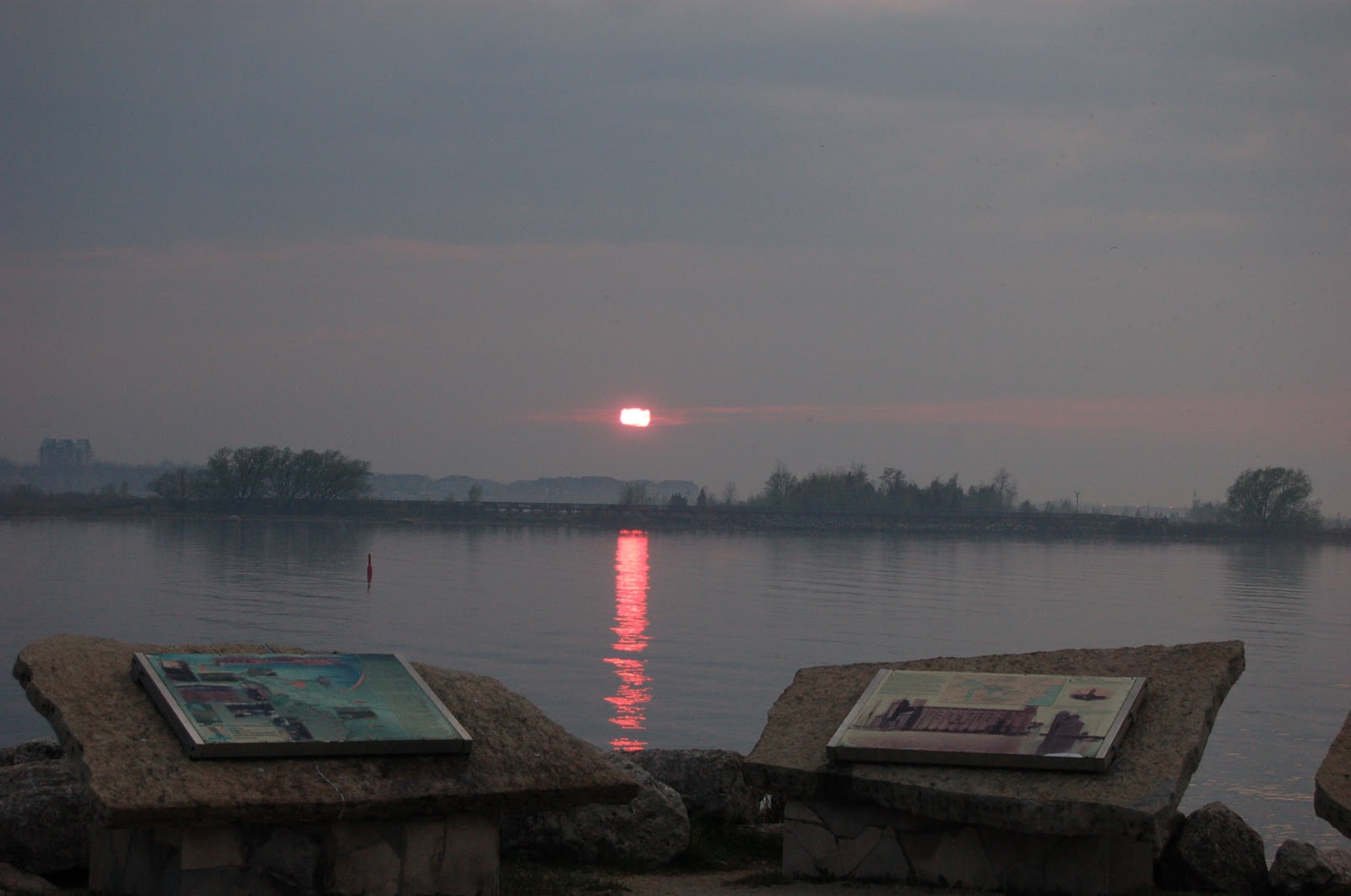
Stayner Home Renewed, Upstairs Down.
We recently turned this older, run-down home into a two-unit, income producing property. Do you need ideas for investment properties? With 25+ years combined, in building and real estate, I can provide some insight. If you have a property in mind, let's talk.
Monday, April 11, 2011
make your home COOL
Well get ready for it. Here it comes. The humidity, and the heat.
After the past few days, this could be an idication that we are headed into a hot humid spring and summer. Regardless, of whether we are or not, we should be ready for the heat and humidity. What are you going to do to reduce your heat and humidity in your home. One very important thing you should know is that you do not want to have humidity level to exceed 60 %. Then you may start developing mold in your basement. Your will start to see and feel it on paper products. Such as books,photos and posters, just to name a few. Then your clothes and furniture will feel moist. Then you will see it on the wall near the floor where the air is the heaviest and contains the most water content. Also remember that your concrete basement floor is always colder then the warm moist air around it. Alway remember that cold air is heavy and warm air is light. That is why your second floor or attic is always hotter than your basement. Also remember that when warm air meets cold air it will turn to condensation. That is why your cold water supply lines and toilet will sweat on the hot humid days. Also if you have a tile floor in the basement it could sweat and create water on the surface, be careful it could be slippery. As well, remember that if you do not remove that moisture out of your basement OR crawlspace that you get mold. Mold is there before you even see it. It is a health hazard as well. People can develope allergies or get sick from it.
So you say one of two things. Big deal or lets deal with it and lets control it.
Here are just a few things you can do to improve your living and building health of your home.
1. Get the air moving in your basement or crawl space, it help dry it out. Buy a couple of portable fans
and put one at each end of the basement. Keeping them on low will work fine, unless really humid.
2. If it is really cool or moist in your basement or crawlspace turn the heat on a little bit to equalize the
tempurature within the house.
3. Turn on the furnace fans and draw some of the cold air out of the basement to the upstairs. This will
also prolongs using the more expensive air conditioning.
4. Install a humidex, costs about $500, and it acts just like a dehumidifier, but costs less to operate and
you do not have to empty the holding container.
5. Buy an energy star rated dehumidifier and hook it up to a floor drain.
6. It is also a good idea to open a window little bit to allow for fresh air.
7. If you have to turn on the air conditioner, this is likely the most expensive way to cool your home, but
it works. It will also remove a lot of the moisture out of the air.
Some other small things to consider.
1. Make sure your attic/roof has adequate ventilation.
2. If you are going to reshingle your roof, do not use black or dark shingles, because they absorb heat.
3. Plant trees and plants that may block the hot summer sun. If you go under a tree in the summer it
always feels cooler.
4. Limit your use of incandescent lighting, because most of the energy used is wasted in heat. Be careful
though when using CFL bulbs because when they break they are toxic.
5. Shade your air conditioner to keep the hot sun off it.
6. Close your windows and window covers during the day.
7. Open your blinds and windows during the cool of the evening. Try to get a cross breeze going.
8. Place a fan near the window, not in the window. Watch for rain, because the fan may draw the rain
into the house.
9. Keep extra water and drinks in the basement before putting in the fridge. If you put them in warm or
hot it takes much longer to cool down, and you will NEED them.
These are just a few things to do that will help you stay cool. When you are ready to sells your home or buy one bring me a long and I will give you some great tips as to how to keep your home cooler in the summer and warmer in the winter. I would love the opportunity to help you or your referrals out.
Thanks for taking the time to read this.
Joseph Talbot, ASA, SRES, AGA
Sales Representative
Remax Clearview Inc. brokerage.
705-733-5821
Check out my website for other great information.
http://www.josephtalbot.ca/
After the past few days, this could be an idication that we are headed into a hot humid spring and summer. Regardless, of whether we are or not, we should be ready for the heat and humidity. What are you going to do to reduce your heat and humidity in your home. One very important thing you should know is that you do not want to have humidity level to exceed 60 %. Then you may start developing mold in your basement. Your will start to see and feel it on paper products. Such as books,photos and posters, just to name a few. Then your clothes and furniture will feel moist. Then you will see it on the wall near the floor where the air is the heaviest and contains the most water content. Also remember that your concrete basement floor is always colder then the warm moist air around it. Alway remember that cold air is heavy and warm air is light. That is why your second floor or attic is always hotter than your basement. Also remember that when warm air meets cold air it will turn to condensation. That is why your cold water supply lines and toilet will sweat on the hot humid days. Also if you have a tile floor in the basement it could sweat and create water on the surface, be careful it could be slippery. As well, remember that if you do not remove that moisture out of your basement OR crawlspace that you get mold. Mold is there before you even see it. It is a health hazard as well. People can develope allergies or get sick from it.
So you say one of two things. Big deal or lets deal with it and lets control it.
Here are just a few things you can do to improve your living and building health of your home.
1. Get the air moving in your basement or crawl space, it help dry it out. Buy a couple of portable fans
and put one at each end of the basement. Keeping them on low will work fine, unless really humid.
2. If it is really cool or moist in your basement or crawlspace turn the heat on a little bit to equalize the
tempurature within the house.
3. Turn on the furnace fans and draw some of the cold air out of the basement to the upstairs. This will
also prolongs using the more expensive air conditioning.
4. Install a humidex, costs about $500, and it acts just like a dehumidifier, but costs less to operate and
you do not have to empty the holding container.
5. Buy an energy star rated dehumidifier and hook it up to a floor drain.
6. It is also a good idea to open a window little bit to allow for fresh air.
7. If you have to turn on the air conditioner, this is likely the most expensive way to cool your home, but
it works. It will also remove a lot of the moisture out of the air.
Some other small things to consider.
1. Make sure your attic/roof has adequate ventilation.
2. If you are going to reshingle your roof, do not use black or dark shingles, because they absorb heat.
3. Plant trees and plants that may block the hot summer sun. If you go under a tree in the summer it
always feels cooler.
4. Limit your use of incandescent lighting, because most of the energy used is wasted in heat. Be careful
though when using CFL bulbs because when they break they are toxic.
5. Shade your air conditioner to keep the hot sun off it.
6. Close your windows and window covers during the day.
7. Open your blinds and windows during the cool of the evening. Try to get a cross breeze going.
8. Place a fan near the window, not in the window. Watch for rain, because the fan may draw the rain
into the house.
9. Keep extra water and drinks in the basement before putting in the fridge. If you put them in warm or
hot it takes much longer to cool down, and you will NEED them.
These are just a few things to do that will help you stay cool. When you are ready to sells your home or buy one bring me a long and I will give you some great tips as to how to keep your home cooler in the summer and warmer in the winter. I would love the opportunity to help you or your referrals out.
Thanks for taking the time to read this.
Joseph Talbot, ASA, SRES, AGA
Sales Representative
Remax Clearview Inc. brokerage.
705-733-5821
Check out my website for other great information.
http://www.josephtalbot.ca/
Thursday, March 10, 2011
New Mortgage Rules Coming on March 18th
Wondering how the new mortgage rules are going to affect you? Here's some info from the Ontario Securities Commission.
March 2, 2011
There has been an ongoing conversation about good and bad debt in the news lately – is there a difference and how does it relate to Canadians’ personal situations? The mortgage meltdown in the U.S. and the all-time high consumer debt levels in Canada have also raised an alarm.
The Canadian government is now weighing in on the issue. Finance Minister Jim Flaherty recently made an announcement on new mortgage rules that serve the dual purpose of protecting the overall economy as well as nudging Canadians back towards lower personal debt levels.
What happened to the days of mortgage-burning parties? Not so long ago, it used to be a big point of pride to finally own one’s home. And by “own”, it was meant that not a penny was owed, unlike today when “owning” seems to mean living in a house with a mortgage, no matter how large that mortgage may be.
Starting March 18, 2011:
So what do these changes actually mean for homeowners and first-time homeowners?
As our government has taken a look at our finances and taken measures to restrain our borrowing, we too should be taking action. Assess your debt – good or bad – and make a plan to pay it off. The best debt, after all, is no debt – there can be no argument about that.
March 2, 2011
New Mortgage Rules – What Do They Mean?
Related Resources


The Canadian government is now weighing in on the issue. Finance Minister Jim Flaherty recently made an announcement on new mortgage rules that serve the dual purpose of protecting the overall economy as well as nudging Canadians back towards lower personal debt levels.
What happened to the days of mortgage-burning parties? Not so long ago, it used to be a big point of pride to finally own one’s home. And by “own”, it was meant that not a penny was owed, unlike today when “owning” seems to mean living in a house with a mortgage, no matter how large that mortgage may be.
Mortgage Rule Changes
The Government of Canada’s mortgage changes impact both new and current homeowners. The three rules of the program are as follows:Starting March 18, 2011:
- The maximum amortization period will be reduced to 30 years from 35 years.
- The maximum amount Canadians can borrow in refinancing their mortgage will be lowered from 90% to 85% of the value of their home.
- Ottawa will withdraw government insurance backing on lines of credit secured by homes.
Starting April 18, 2011:
So what do these changes actually mean for homeowners and first-time homeowners?
First-Time Homeowners
First-timers will need to either buy a home with more money down, or one worth less than they could previously afford. The difference between a 30- and 35-year amortization on a $200,000 home can vary depending on the interest rate; nonetheless, the average extra cost for a homeowner is expected to be about $100 more per month. So they must either save more up front, increase monthly payments, or both. The Government of Canada is trying to ensure that more of these buyers own their homes sooner, lowering risk and the amount of debt they are carrying.Refinancing Homeowners
Homeowners who are looking to refinance their homes, consolidate debt or make home renovations will not be able to access as much money as they did before. This is because, under the new rules, they will only be allowed to refinance up to 85% of the value of their home – down from the previous limit of 90%. This means that for a home valued at $200,000, refinancing it at 85% will allow the homeowner to access up to $170,000, while previously they would have accessed up to $180,000.All Homeowners
The Government of Canada’s withdrawal of insurance on home equity lines of credit (HELOC) will likely mean an increase in interest rates at the banks. As the Government is no longer backing these loans, banks will need to bear more risk and it is anticipated that they will pass this on to homeowners in the form of higher interest rates.As our government has taken a look at our finances and taken measures to restrain our borrowing, we too should be taking action. Assess your debt – good or bad – and make a plan to pay it off. The best debt, after all, is no debt – there can be no argument about that.
Subscribe to:
Posts (Atom)